If you’ve driven past an industrial park or near a major highway interchange lately – you’ve probably noticed big, boxy buildings are popping up everywhere. It seems like every time you blink, another few acres are being converted into logistics hubs.
It’s not just a trend – there’s a real shift happening behind those concrete walls.
With the surge of e-commerce, expanding logistics networks, and growing demand for cold storage – investors and business owners alike are asking the same question: Is it profitable to build a warehouse right now? The answer is YES – but there’s a catch. It has to be the right warehouse, in the right place, built by the right team.
In this guide, we’re going to break down the numbers, the trends, and the realities of warehouse construction in Calgary – helping you decide if this investment fits your portfolio.
Why Warehouse Construction Is in High Demand
To assess profitability, you first have to understand demand. That is because warehouses today are not just for storing old furniture – they are a pillar of the global logistics and supply chain.
The Rise of E commerce and Third Party Logistics
Every time someone clicks Buy Now on their phone, the product must be available for delivery. As retail shifts from brick and mortar storefronts to digital carts – the demand for back of house space has skyrocketed. Third-party logistics (3PL) providers — the companies that handle shipping for other businesses — are snapping up square footage faster than it can be built.
Increased Need for Fulfillment Centers
There is a clear distinction between traditional storage and a fulfillment center. Storage is static; fulfillment is dynamic. These facilities require higher ceilings for racking systems, better flooring for robots and forklifts, and additional loading docks to accommodate high turnover. The profitability here is driven by volume.
Urban vs. Suburban Trends
We are also seeing a fascinating split in where these are being built. In suburban and rural areas, massive distribution centers are being built on inexpensive land to serve as regional hubs.
At the same time, urban areas are becoming smaller “last-mile” delivery hubs, with warehouse construction in Calgary enabling their growth. These are highly valuable because they enable companies to offer same-day delivery to dense population centers.
Key Factors That Determine Warehouse Profitability
Not all warehouses are created equal. If you build a generic metal box in the middle of nowhere – your ROI will look very different than a high-bay distribution center near a port.
Location and Land Cost
In real estate, it is a cliché, but location is everything. For a warehouse, good location doesn’t mean a nice view – it means access. Profitability is directly tied to how easily trucks can enter and exit.
You need to be near major highway interchanges, ports, or rail spurs. The closer you are to these roads, the higher the rent you can command. On the other hand, navigating zoning laws and acquisition costs is the first hurdle. If you overpay for the dirt, it will take years to recoup it in the build.
Type of Warehouse You Build
The “class” of the building dictates the tenant you attract. A standard storage facility made through warehouse construction in Calgary has lower construction costs and rental rates. Good for steady, long-term tenants such as local contractors or manufacturing suppliers.
At the same time, distribution requires higher specifications but attracts high-credit tenants such as Amazon, FedEx, and national retailers.
Construction Costs and Design Choices
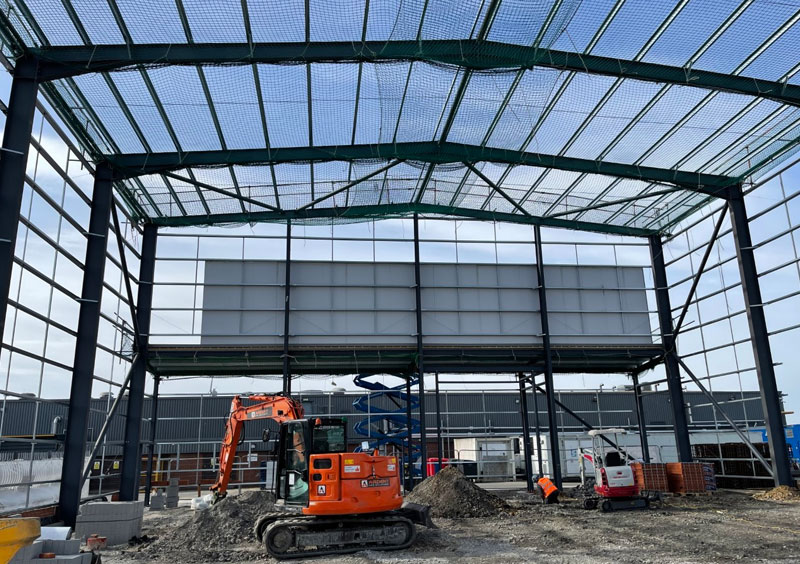
Your profit margin is determined by both purchase and build costs. Pre-engineered metal buildings (PEMB) are cost-effective and fast to erect. Tilt-up concrete wall construction offers better durability, security, and fire ratings, which can lower insurance costs for you and the tenant.
Meanwhile, in dense areas where land is expensive, we are actually starting to see multi-story warehouses. They are expensive to build, but maximize the revenue per acre.
How Much Does It Cost to Build a Warehouse?
This is the million-dollar question—sometimes literally. While prices fluctuate with steel and concrete costs, the range is generally wide depending on complexity.
Average Construction Cost Per Square Foot
In today’s market, a basic warehouse shell can range from $75 to $150 per square foot, while specialized facilities (such as cold storage or manufacturing) can easily exceed $200 per square foot.
The Cost Breakdown
Where does the money go in warehouse construction in Calgary? 60-70% goes toward physical materials, including the foundation, steel frame, siding, roofing, HVAC, and electrical. 20-30% goes toward architectural design, engineering, permits, inspections, and insurance.
The remaining 10-20% goes toward grading the land, constructing parking lots, bringing in utilities, and managing stormwater.
Reducing Hidden Costs
This is where working with an experienced Commercial General Contractor pays off. Inexperienced builders often overlook soil stabilization and fire code requirements for high-piled storage.
At Sky Blue Construction, we focus on “Value Engineering.” This means we review your plans and suggest material swaps or design tweaks to save money without sacrificing quality.
Warehouse Revenue Streams Explained
Okay, you’ve built it. How does it make money?
Leasing and Owner-Occupied
In the warehouse leasing market, most investors rely on Triple Net Leases (NNN). This is a landlord’s dream. The tenant pays the rent plus the property taxes, insurance, and maintenance. Your income is almost entirely passive net profit.
Owner-occupied is right for you if you are building for your own business. This is because the “profit” is in equity and savings. Instead of paying rent that rises every year, you are paying down a mortgage on an asset that is appreciating.
Storage and Logistics Income
If you operate the warehouse as a logistics business rather than just a landlord, the revenue model changes. You can charge clients based on how much space they use. At the same time, value-added services paired with professional warehouse construction in Calgary are the secret sauce.
You don’t just store goods; you offer “pick and pack” services, inventory management, kitting, or cold chain handling. These services have much higher margins than simple rent.
Profit Margins and ROI Expectations
Real estate is a long game, but industrial real estate has outperformed other sectors (such as office and retail) for years. Investors typically look at the “Cap Rate” (Capitalization Rate). This is your Net Operating Income divided by the property’s value.
Currently, industrial cap rates typically range from 5% to 7%. While that might sound modest, industrial real estate is generally considered lower risk and requires less active management than an apartment complex or shopping center.
Why Choose Sky Blue Construction for Warehouse Projects?
Building a warehouse is a massive logistical puzzle. You need a partner who can see the finished picture before the first shovel hits the dirt. At Sky Blue Construction, we specialize in commercial and industrial projects.
Experience
We know the difference between a Class A logistics center and a light-industrial flex space. We build to suit your business goals. On-time delivery protects your cash flow and accelerates your return.
Customization
We don’t do basic warehouse construction in Calgary. We analyze your land and your budget to design the most efficient structure possible.
Execution
In construction, time is money—a delayed opening results in lost rent or production. We pride ourselves on tight project management that keeps projects on schedule.
Profit Is in the Planning
The profitability of building a warehouse depends on strategy. It’s about more than just steel beams and concrete slabs; it’s about creating a space that facilitates modern commerce. If done correctly, a warehouse is one of the most stable, profitable assets you can own. But the gap between a profitable project and a money pit often lies in the planning and the construction partner you choose.
Don’t leave your ROI to chance. If you are considering a new build or an expansion, let’s talk numbers. Contact us for a consultation and feasibility assessment.
Frequently Asked Questions (FAQs)
Is warehouse construction a good long term investment?
Yes. Industrial real estate has historically delivered stable cash flow and strong appreciation – particularly amid the current growth in logistics and e-commerce.
How long does it take to build a warehouse?
Typically, standard warehouse construction in Calgary takes a year from breaking ground to completion. However, permitting and design phases before construction can add several months to that timeline.
What size warehouse is most profitable?
It depends on the market. Currently, mid box warehouses are in high demand because they are versatile enough for single or multi tenant use.
Can small warehouses be profitable?
Absolutely. Flex space warehouses (small units of 2,000–5,000 sq. ft. geared toward small businesses) often command higher per square foot rents than massive distribution centers.
How can construction quality impact ROI?
Higher-quality construction (better insulation, stronger floors, higher ceilings) attracts better tenants who are willing to sign longer leases and pay higher premiums, thereby stabilizing your ROI.

