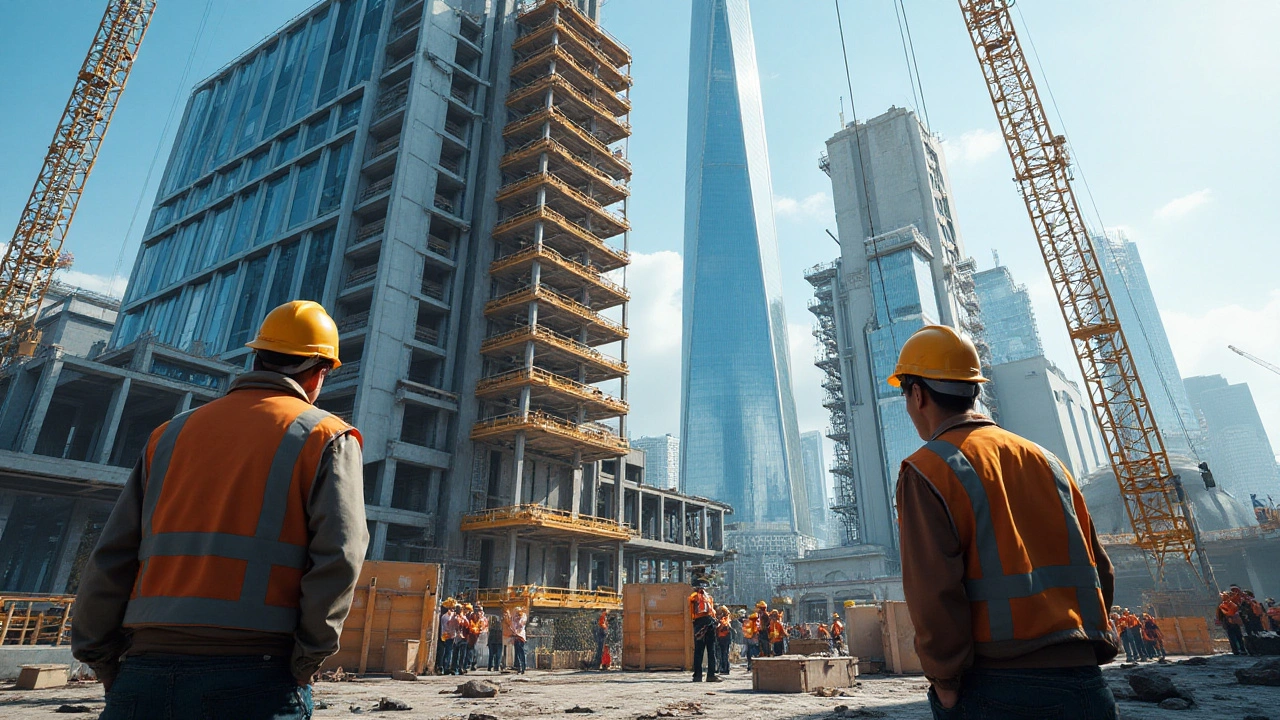
High above Calgary’s shifting skyline, the view from a crane tells a story no blueprint ever can.
In 2026, if you look down the Beltline to the industrial parks spread toward the airport, you see a city that has evolved from the concrete and steel-only to massive logistics hubs.
Today, commercial construction in Calgary is a demanding industry where a project’s success depends on more than blueprints – it integrates smart technology, sustainable building practices, and proactive planning to prevent problems before they arise.
If you’re wondering how today’s commercial builds differ from those of even five years ago – keep reading ahead. This article breaks down the new innovations for developers, owners, and investors exploring Calgary’s construction industry.
The New Reality of Commercial Construction in Calgary
Commercial projects today look different from those of even five years ago.
The reason behind it is that the “old way” of construction – reactive and linear – cannot meet the expectations of today’s fast and complex commercial projects.
Several local factors are integrated into how we plan and deliver projects:
- Expanding Commercial Corridors: Commercial spaces are now expanding with mixed use developments that combine retail, office and residential functions in a way that maximizes value and flexibility.
- The Demand for Flexibility: Businesses now require adaptable interior designs that can change from open concept offices to high density tech labs without a full scale renovation.
- Tighter Municipal Standards: Under the Calgary Climate Strategy: Pathways to 2050, energy and safety standards are integrated from the first shovel in the ground.
What This Looks Like on an Active Job Site:
Five years ago, a developer could begin commercial construction in Calgary and defer HVAC upgrades until a tenant was confirmed. That approach worked when deadlines were extended and regulations were simpler.
Today, that “wait and see” method creates problems. Late design changes can trigger permit delays, disrupt schedules and increase costs. Instead, potential tenant requirements – such as ventilation capacity, zoning needs or future expansion – are considered and built into the core systems before the first concrete is poured.
Did You Know? According to the Calgary Construction Association 2023-2026 Snapshot, the industry contributes approximately 8.6% to Calgary’s GDP.
Modern Commercial Construction Trends
Commercial Construction in Calgary has shifted toward a careful balance of technology, planning and experience.
Here is how the industry has modernized its approach to build complex projects:
Smarter Design and Pre Construction Planning
These days, you won’t see construction crews improvising during construction anymore. Today, we plan every step in advance before the first permit is issued. Consequently, issues are identified early rather than mid build.
Moreover, modern teams consider not only the cost to build but also the ongoing operating costs, including maintenance, energy and day to day operations.
This helps make smarter decisions that save expenses in the long run.
It’s not just theory – the industry for commercial construction in Calgary is increasing. In 2025, the value of investment in commercial building permits rose nearly 5% year over year. This shows how careful planning matters in a fast paced market.
Efficiency Over Excess
Today’s commercial clients are not focusing on the size of a building alone. They want smarter buildings that are cost effective and high performance.
As a result, the focus is shifting from building oversized spaces that are costly to heat, cool and maintain to designing layouts that work for today’s needs and adapt for tomorrow.
What this means practically:
- Less wasted space
- Better energy performance
- More resale appeal
Sustainability With Practical ROI
Sustainability in Calgary’s commercial construction is now strategic and mandatory.
Energy performance and greenhouse gas reductions are now part of the planning process as guided by Calgary’s Climate Strategy: Pathways to 2050.
Building owners today don’t just look at the upfront construction cost only. We choose energy efficient systems, durable materials and smart mechanical solutions that can save thousands in energy bills and maintenance over a building’s lifetime.
Commercial Construction Then vs Now
Here’s a clear comparison of what has changed:
| Aspect | Old Approach | Modern Approach |
| Planning | Reactive, “figure it out later” | Thought out and planned before construction starts |
| Scheduling | Step by step trade only | Coordinated timelines for all trades working together |
| Budgeting | Rough estimates, often over allowances | Clear, data driven budgets with real cost forecasts |
| Compliance | Checked late in the process | Built into the project from day one |
| Flexibility | Fixed layouts, hard to change | Spaces designed to adapt for future tenants or flexibility |
What Clients Often Overlook Before Starting a Project
From field experience, we’ve seen that early preparation decides whether a project succeeds or struggles with delays and cost overruns.
That’s why, when clients engage us early, we help them assess:
- Zoning and land rules compatibility before investing in design
- Planning for approvals and permitting processes
- Coordination of utilities and site services
- Future tenant or operational flexibility
Building Trust Through Experience
When it comes to commercial construction in Calgary, hiring someone with experience and professionalism is important.
Because a project may look simple, but the realities of permitting, inspections, municipal regulations and unexpected site challenges are not as easy as they look on paper.
And when you hire a contractor with little or no experience can lead to delays, cost overruns, and compliance headaches – not to mention stress for everyone involved.
This is why you need a team like Sky Blue Construction that understands both the technical and local aspects of building in Calgary.
We bring:
- A deep understanding of Calgary’s permitting, inspections and municipal processes
- A commitment to safety and local employment
- A reputation as an employer for top regional talent
Conclusion
Commercial construction in Calgary has evolved far from merely stacking concrete and steel. Today, the success of a project depends on planning, technology, sustainability and expertise that a local professional brings. Every decision – from layout and materials to mechanical systems – is planned and designed to save time, reduce costs and deliver long term value.
Buildings are now flexible, high performance and future-ready, reflecting the outcome of integrating innovations in construction.
However, one requires a professional construction company to help make sure that the buildings are constructed well to serve businesses, communities, and tomorrow!
Let’s Build Something Meaningful Together
Ready to turn your commercial project into Calgary’s next landmark?
Talk to our team at Sky Blue Construction now!
Frequently Asked Questions
Is commercial construction in Calgary different from other cities?
Yes. Calgary’s climate, permitting process, and growth corridors create unique scheduling and compliance challenges that require specific expertise and strategic planning.
What is the Flight to Quality in Calgary office spaces?
The flight to quality means tenants moving away from outdated buildings (“Class C”) toward modern Class A+ structures with superior air quality, natural light and amenities that support productivity and attract tenants.
Are modern commercial buildings more expensive to build?
Upfront costs can be higher due to advanced materials, performance standards and sustainability requirements. However, these investments typically reduce long-term maintenance expenses – offering stronger lifecycle value.
How do I future-proof a commercial building in Calgary?
To future proof a commercial building, focus on flexible layouts, efficient mechanical systems, and compliance ready design. Buildings that adapt to tenant change and evolving regulations hold value longer and attract better long term returns.

